Defilade Medics and Rescue: How Casualty Recovery Works
How Defilade handles wounded soldiers, dragging, rope rescues, stretcher teams, medics, revival and evacuation — and why the system matters in a campaign with permadeath.
Primary search intent
Defilade medics
On this page +
RBGames has described the rescue system in official updates and developer video. We have not played the build. The exact state machine — wounded versus downed versus dead — and the healing times are not published.
Most RTS games treat a casualty as a subtraction. A unit’s health reaches zero, the model falls over, and the player mentally removes it from the army. Defilade is trying to make the interval between “hit” and “gone” into gameplay.
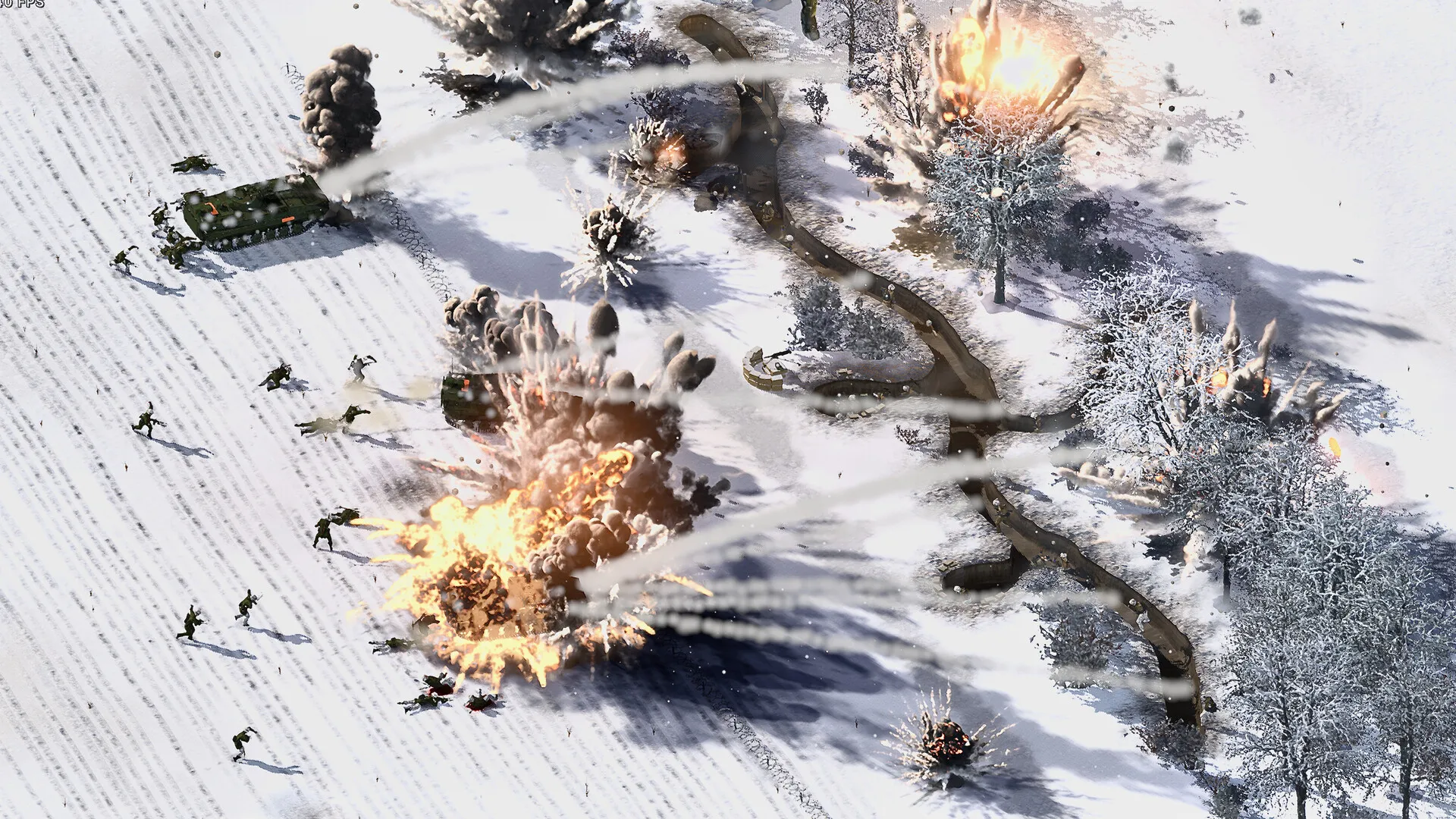
A soldier shot in the leg limps until he bandages it. A wounded man crawls for cover. A comrade drags him. If the direct rescue fails, someone throws a rope. Medics lift him out of a trench on a stretcher. If the medic is killed, the other one puts the stretcher down and drags the casualty himself.
That is a chain, not a heal button. And it creates a dilemma every time it triggers.
The confirmed casualty chain
| Stage | What happens | Confirmed detail |
|---|---|---|
| Hit | Soldier is wounded, not necessarily killed | Leg wounds cause limping until bandaged |
| Self-care | Soldier bandages himself | Bandage is visible on the model |
| Crawl | Wounded soldier seeks cover | Crawling and prone movement confirmed |
| Buddy rescue | A comrade drags the casualty | Squadmates pull each other up after a blast |
| Rope rescue | Used when a normal rescue fails | Rope thrown from cover to haul the wounded man in |
| Stretcher | Medics carry the casualty out | Including lifting wounded out of trenches |
| Revival | Soldier returns to the fight | Revived men get up and limp for a while |
| Evacuation | M113 evacuation APC (reported) | Shown in coverage of the 7 November update |
The chain has failure points at every stage. The rescuer can be shot. The casualty can be left in the open. The medic can be killed. The evacuation vehicle can be ambushed. That is the gameplay.
Why it matters beyond sentiment
In a campaign with named soldiers and permadeath, a rescue preserves experience. The developer describes soldiers levelling up and carrying over between missions; if one dies, he is gone. A veteran is not just a voice line. He is accumulated capability.
In a skirmish, the economics are different but the logic is similar. A rescued soldier is a replacement you do not have to pay for, and a squad that keeps its men keeps its cohesion.
There is also a morale dimension in the design: soldiers surrender when broken, and prisoners can be interrogated. A force that leaves its wounded to be captured is handing the enemy intelligence.
How to run a rescue under fire
There is no published rescue order or timer, so this is a framework based on the confirmed behaviour:
- Win the firefight first. A rescue attempt without covering fire is a second casualty.
- Mark the casualty’s position. In a big fight, the wounded man is easy to lose. Keep the squad together and note which building or trench he fell beside.
- Use the nearest cover, not the shortest route. A rescuer who crosses the open to reach a man behind a wall has solved nothing.
- Send a buddy. The medic is the specialist, but the squadmate is the one who can drag immediately.
- Plan the hand-off. If a stretcher or vehicle is coming, the casualty needs to be at a collection point that the vehicle can reach.
- Do not chase a lost cause. If the position is overrun, the rescue may become a prisoner recovery operation later.
The confirmed dive reaction to FPV drones suggests that rescue attempts will be interrupted from the air. If a drone is overhead, the rescue window may be closed until it is gone or the squad is concealed. Camo nets hide men from drones; a casualty collection point under cover is worth more than one in the open.
Medics are not a heal aura
The medic’s value is in the physical rescue, not in a radius that restores hit points. That means medic placement matters:
- Keep the medic behind the squad’s firing line, not in it.
- Keep a stretcher route open.
- Do not put the medic in the same building as the casualty if the building is being shelled.
- In a trench fight, the stretcher team has to expose itself at the lip. Cover that moment.
The M113 evacuation carrier, reported from the 7 November update, would extend the chain further back. If it works as described, the vehicle is only useful if the route to it is covered. An ambulance that cannot reach the casualty is a parked target.
Triage in practice
Not every casualty is worth the same risk. A rough priority:
- A veteran or squad leader whose loss would break the squad’s capability.
- A medic who can save others later.
- A soldier in cover who can be reached without crossing open ground.
- A soldier in the open under active fire — only with a proper rescue plan.
- A soldier behind enemy lines — this is a prisoner recovery problem, not a medic problem.
That is not a moral ranking. It is a risk ranking.
What we still do not know
- The exact wounded/downed/dead states.
- How long a soldier survives without treatment.
- Whether medics carry limited supplies.
- Whether revival restores full combat effectiveness or leaves a permanent penalty.
- How the M113 evacuation interacts with stretcher teams.
- Whether rescue can be ordered directly or is fully automatic.
The demo will answer some of this. Until then, treat any guide that gives exact healing times as fiction.
The design bet
Defilade is betting that players will care about a soldier because they have seen him crawl, get dragged and limp back into the line. That is a more ambitious bet than a health bar. It is also the part of the game most likely to break under competitive pressure: if rescuing is always too slow, players will learn to ignore it.
The demo is the test. Watch whether the rescue chain changes your decisions, or whether it is just a longer death animation.
For the unit side, see the combat medic dossier and the M113 entry. For the wider system, the systems manual covers the prisoner and intelligence chain that follows a failed rescue.