Defilade Supply Lines: FOBs, Trucks and Convoy Defence
How Defilade’s supply system works: forward operating bases, physical supply roads, truck convoys, ammunition, manpower and the AI commander’s raids.
Primary search intent
Defilade supply lines
On this page +
RBGames has confirmed forward operating bases, supply trucks, physical roads, ammunition constraints and an AI commander that guards its own convoys and raids the player’s. Exact truck capacity, resource rates and interception rules are not published.
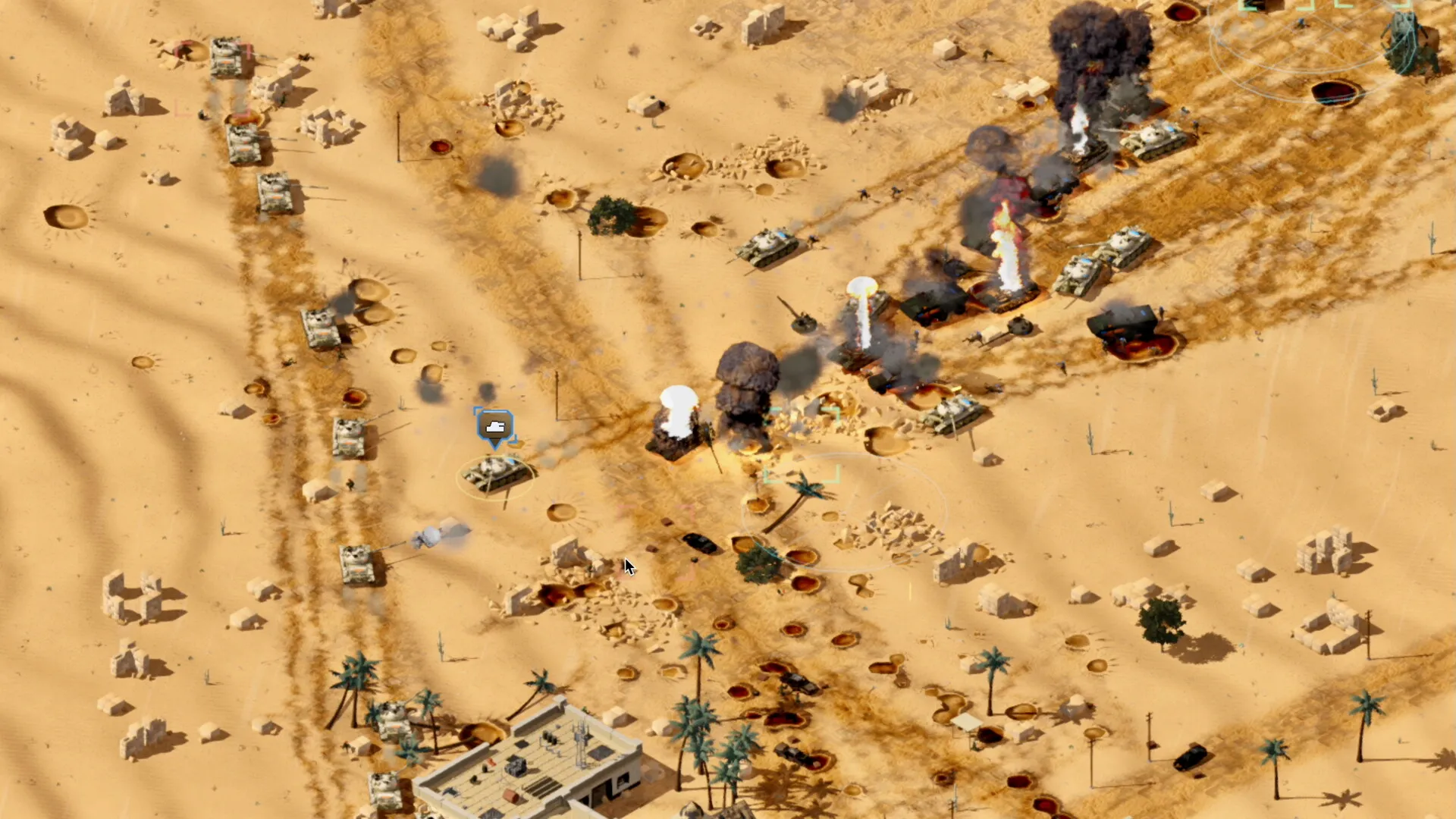
Defilade’s logistics pitch is simple: an army is connected to its base by a road, and that road can be cut. The 22 October update describes supply trucks moving resources and ammunition forward, and the AI commander guarding its own trucks while raiding yours.
That makes logistics a tactical problem, not a spreadsheet. You are not just asking “do I have enough ammunition?” You are asking “can the truck get here, and who is watching the route?”
The chain, as published
Illustrative chain · not a game map
Base / production
Road + convoy
FOB / depot
Squads / vehicles
The diagram is our summary of the announced design. It does not represent a specific map, resource rate or building chain.
The important part is the middle: the road. A forward base without a secure route is a warehouse with a countdown on it. The AI commander is confirmed to understand this. It guards its own trucks and raids the player’s, which means the threat is not random — it is deliberate.
What supply actually constrains
Two separate resources are confirmed:
- Ammunition, moved by truck and consumed by infantry and vehicles.
- Manpower, which runs out and makes capture points matter.
Those are different problems. Ammunition is a throughput issue: can the road deliver enough? Manpower is an attrition issue: can you replace the soldiers you lose? A base with full ammunition and no manpower is still finished.
The full model is unknown. We do not know whether ammunition is tracked per soldier, per squad or per weapon; whether vehicles rearm at a FOB; or how quickly a truck replaces a lost load. The demo should answer some of it.
The AI commander’s raid
The 22 October update says the rebuilt AI commander:
- only knows what its own men have seen;
- scouts and gathers its army;
- pulls back when losing and attacks from another side;
- counters your army and remembers where it lost men;
- fights for capture points and builds closer to the front;
- guards its supply trucks and raids yours;
- gives up when beaten;
- can build a nuke late in a match.
That is a description of an opponent that thinks in fronts, not a script that sends a wave every five minutes. A raid on your supply line may be a response to something its scouts have seen: a thin rear guard, an undefended bridge, a base that expanded too far.
If the AI only acts on what it has seen, then concealment has operational value. A convoy that is not observed is less likely to be raided. Camo nets, terrain and route selection are not cosmetic; they deny the commander the information it needs to plan.
How to protect a supply line
There is no published escort UI or convoy planner, so these are principles derived from the confirmed systems, not tested build orders.
1. Shorten the line
Every metre of road is a metre the enemy can watch. Put the FOB as far forward as you can defend, not as far forward as you can build. If the route runs through a chokepoint you do not control, the base is ahead of its own logistics.
2. Watch the chokepoints, not the whole road
Bridges, village streets, fords and trench lines are natural ambush points. A single squad with a machine gun on the overlooking side can turn a bridge into a toll booth. The Rivers map makes this explicit: bridges can collapse and soldiers can drown.
3. Escort the load, not the route
A patrol that drives the road all match is expensive. A escort that meets the convoy at the dangerous section is cheaper. The exact convoy mechanics are unknown, but the principle survives: protect the moment of exposure.
4. Disperse the depot
A forward base is a concentration of value. If the enemy can see it, they can shell it. Keep production and storage separated where the build radius allows, and do not park every vehicle in one courtyard.
5. Use the terrain, not just the road
A road is the fastest route, not the only one. If the enemy is camped on the main road, a longer route may keep the army supplied. The game’s terrain is fully destructible; a new route may open through a wall or close when a bridge falls.
Supply and the bridge tank
The bridge tank is confirmed to lay a new bridge, and bridges can break and fall into rivers. That makes engineering a logistics weapon. Destroying a bridge can strand an enemy army; restoring one can reopen your own line.
The bridge tank is explicitly listed as not in the demo, so this interaction will not be testable on 1 December. It is a full-build concern.
A simple logistics checklist
Before you order a push, ask:
- Where is the nearest FOB?
- Which route feeds it?
- Who can see that route?
- What happens if the bridge goes down?
- Do I have a unit that can respond to a raid without abandoning the front?
- Is my manpower replacing losses, or am I consuming the reserve?
If you cannot answer the second and third questions, the push is running on optimism.
What we still do not know
- Truck capacity, speed and resource types.
- Whether roads are player-built or generated by the FOB.
- How interception is detected and whether convoys can reroute.
- Whether supply is a global pool or a local radius.
- How manpower regenerates, if at all.
- The full ammunition model for infantry and vehicles.
We will update this guide after the demo with observed behaviour, not guesses.
Next: base building explains the buildings that anchor the chain, and the beginner guide puts it in the first-match sequence.